Personalized Medicine Landscape in the EU & China: A Survey of Experts

Personalized Medicine Landscape in the EU & China: A Survey of Experts

Personalized Medicine Landscape in the EU & China: A Survey of Experts

News

May 31, 2023

Personalized Medicine is one of the main priorities of the research agenda of the European Commission and the focus of the Integrating China in the International Consortium for Personalized Medicine (IC2PerMed) project. Similar to the European focus, personalized medicine is a current priority of the People’s Republic of China’s government through dedicated policies and its investment plans.

In an article published by the researchers of the IC2PerMed project, of which the WFPHA is a partner, they conducted an expert survey to identify policies, programs, initiatives, and stakeholders linked to the development and implementation of personalized medicine in the European Union (EU) and China and ease opportunities for Sino-European research collaborations.

47 experts participated in the survey, 27 from Europe and 20 from China. According to the article, only 4 participants were aware of the implementation of personalized medicine-related policies in their working country. Experts reported big data and digital solutions, citizen and patient literacy, and translational research as the personalized medicine areas with the greatest policy impact so far. The lack of shared investment strategies and the limited application of scientific developments in clinical practice were found as the main obstacles. Aligning European and Chinese efforts and finding common ground across cultural, social, and language barriers were considered as actions needed to enhance efforts in applying personalized medicine strategies internationally.

According to the article, to achieve efficiency and sustainability of health systems, it remains crucial to transform personalized medicine into an opportunity for all citizens and patients with the commitment of all the stakeholders involved.

The IC2PerMed project aims to support the EU-China collaboration over the developments of personalized medicine research, innovations, and policies through the International Consortium for Personalized Medicine (ICPerMed) initiative, providing people with access to personalized, smart, and inclusive healthcare solutions in the near future.

Integrating China in the International Consortium for Personalized Medicine Project: A Glance

Integrating China in the International Consortium for Personalized Medicine Project: A Glance

Integrating China in the International Consortium for Personalized Medicine Project: A Glance

News

Mar 10, 2023

Cancer is one of the leading causes of death worldwide, and its prevalence continues to rise. Traditional cancer treatments such as chemotherapy and radiation therapy can have significant side effects, and they may not be effective for all patients. The field of personalized medicine has the potential to revolutionize cancer prevention and treatment by tailoring therapies to an individual patient’s specific genetic and molecular profile.

Despite the potential benefits of personalized medicine for cancer, there are still significant challenges to its widespread implementation. One of these challenges is the lack of alignment between policies in different regions of the world. To address this issue, the Integrating China in the International Consortium for Personalized Medicine (IC2PerMed) consortium, of which the World Federation of Public Health Associations (WFPHA) is a partner, has developed a common roadmap for personalized medicine for cancer to foster common approaches between the People’s Republic of China and the European Union (EU) on personalized medicine research, development, innovation, and policies.

The IC2PerMed consortium is an EU initiative that aims to promote the implementation of personalized medicine in prevention and care. The consortium brings together organizations, researchers, policymakers, and healthcare professionals to work towards a common goal of improving patients’ outcomes.

The IC2PerMed consortium’s roadmap for personalized medicine for cancer has been finalized and is being presented at a series of events, including WFPHA webinars, a dedicated workshop at the 17th World Congress on Public Health, and a high-level symposium held in Geneva, Switzerland, in conjunction with the World Health Assembly.

The high-level symposium brings together high-level policymakers, scientists, and Chief Executive Officers from international health-related organizations to discuss the importance of personalized medicine for cancer and beyond and the need for international collaboration to promote its implementation. The meeting also provides an opportunity to showcase the work of the IC2PerMed consortium.
Thank You to the Outgoing Member of Our Governing Council

Thank You to the Outgoing Member of Our Governing Council

Thank You to Outgoing Governing Council Member

News

May 24, 2023

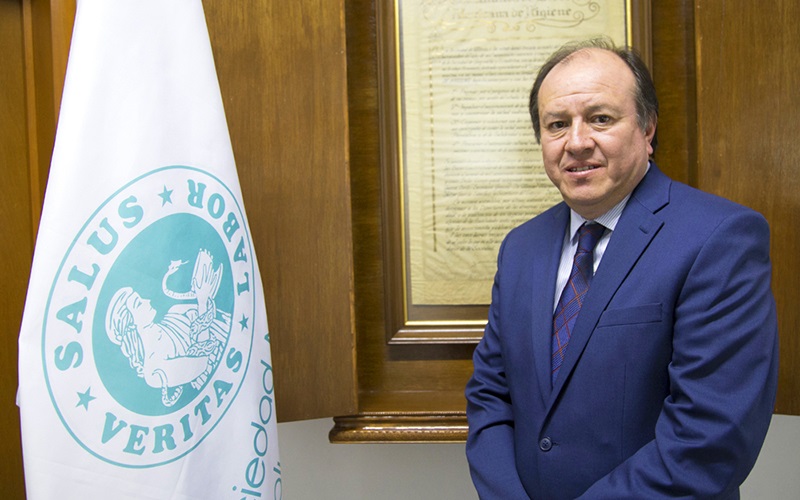
The WFPHA recognizes the outstanding contributions and unwavering commitment of its Outgoing Governing Council (GC) member, Dr Jesus Gonzalez.

Dr Gonzalez, a surgeon from the Faculty of Medicine of the National Autonomous University of Mexico (UNAM), served the GC as a representative of the Americas region.

Dr Gonzalez’s tenure as a member of our GC has been marked by his exceptional dedication, expertise, and relentless efforts to promote global public health. The WFPHA expresses its sincere gratitude to him for his invaluable contributions, which have undoubtedly advanced the organization’s mission to promote and protect public health worldwide. His exceptional leadership, vision, and dedication have been a source of inspiration for colleagues and peers alike.

As Dr Gonzalez embarks on new endeavors, the WFPHA extends its heartfelt appreciation and wishes him a fruitful journey ahead, confident in his ability to continue making a significant difference in the field of public health.

Meet Our New President-elect, Emma Rawson-Te Patu

Meet Our New President-elect, Emma Rawson-Te Patu

News

May 20, 2022

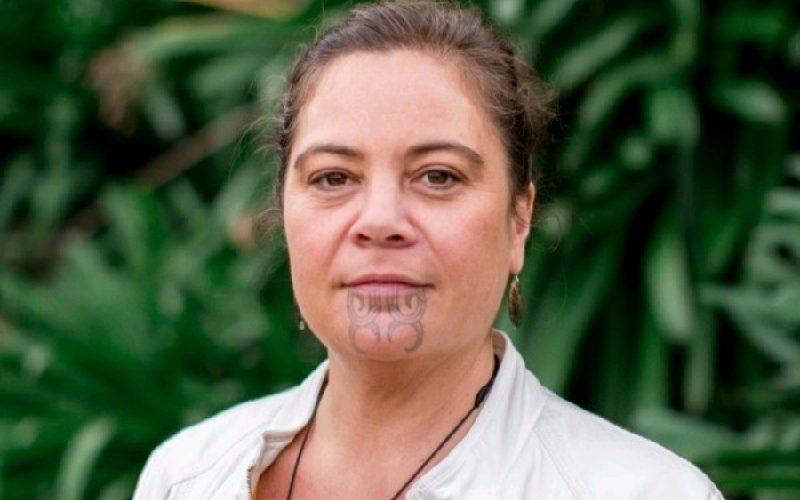
On May 19, 2022, during the General Assembly of the World Federation of Public Health Associations, member organizations have elected Emma Rawson-Te Patu as President-elect. She will be the first Indigenous president of the WFPHA.

Emma is of the Māori tribal groups of Ngāti Ranginui, Ngai te Rangi, Raukawa and Ngāti Haua of New Zealand. She has been involved in Public Health, Hauora Māori (Māori health) for over 18 years.

Achieving Health Equity through Stronger Actions Against Racism & Discrimination

Achieving Health Equity through Stronger Actions Against Racism & Discrimination

Achieving Health Equity through Stronger Actions Against Racism & Discrimination

News

May 22, 2023

Racism and discrimination are fundamental determinants of health. Despite the increasing evidence for the impact of racism and discrimination on both mental and physical health inequities in multiple ways, the issue has gained too little attention in the public health domain so far.

The European Public Health Alliance (EPHA) has initiated and led the pan-European Thematic Network DisQo: anti-discrimination and health equity (DisQo), bringing together more than 40 organizations and individuals, with the shared ambition to address institutional and structural racism and discrimination for health equity.

In May 2023, DisQo sent a joint statement to the European Commission’s Directorate-General for Health and Food Safety (DG SANTE), calling for stronger action against racism and discrimination to achieve health equity.

WFPHA joins organizations working across sectors in this call and commits to taking an active stance against all forms of racism and discrimination.

Conflict and Public Health: Prevention, Responses, Recovery, Rehabilitation, and Reconciliation

Conflict and Public Health: Prevention, Responses, Recovery, Rehabilitation, and Reconciliation

Conflict and Public Health: Prevention, Responses, Recovery, Rehabilitation, and Reconciliation

News

May 6, 2023

“War is a man-made public health problem and it is preventable.” – Borisch (WFPHA)

“It will take decades for Ukraine to bring its public health system to the prewar level.” – Majrooh (Former Afghan Minister of Public Health)

The ongoing conflict in Ukraine has triggered a global health crisis, with people in the country experiencing death, suffering, and displacement, as well as, food and fuel insecurity. Moreover, the crisis has reduced donor funds for addressing other health issues. Unfortunately, the situation remains far from ideal at the global level as well.

According to the World Health Organization (WHO), nearly a quarter of the global population, which amounts to 1.8 billion individuals, currently resides in regions affected by conflict. The adverse effects of such circumstances on public health are significant. Warfare results in elevated mortality rates, the breakdown of social and economic systems, food scarcity, repeated disruptions to healthcare services, the collapse of medical supply chains, the flight of healthcare professionals, and severe epidemics.

The 17th World Congress on Public Health, taking place in Rome from May 2nd to May 6th, will feature Prof. Bettina Borisch, a WFPHA CEO, and Dr Wahid Majrooh, a Former Afghan Minister of Public Health, who will discuss war and conflicts during one of the Plenary sessions.

“Today under international humanitarian law we monitor more than 110 armed conflicts. Some of these make the headlines, while others do not. Some of them started recently, while others have lasted for more than 50 years. War is a man-made public health problem and it is preventable. War and armed conflicts have devastating consequences for the physical and mental health of all the people involved, for the social life within and surrounding the war regions, and for the health of the environment. War diverts, essential and often very scarce resources needed to survive. In addition, there is a vast amount of people that are also negatively impacted by the wider effects of war”, explains Prof. Borisch, a public health expert who proposed the session on war and global health.

The main consequences of the armed conflicts include:

  • Displaced populations
  • Limited access to clean water, food, and sanitation – the basis of public health
  • Increased risk of communicable diseases
  • Impacts on women’s and children’s health: According to a recent study, in 2017, at least 10% of women and 16% of children globally were either displaced by conflicts or lived dangerously close to conflict areas, making them vulnerable to sexual assault, early marriage, harassment, isolation, and exploitation.
  • Impacts on mental health: The psychological consequences of war are devastating, with post-traumatic stress disorder (PTSD), anxiety, depression, and somatoform disorders becoming more prevalent in wartime and post-conflict situations.

“Epigenetics taught us that even for generations after the war the mental health consequences are there”, specifies WFPHA CEO.

Furthermore, wars seldom affect only local areas but instead, have worldwide repercussions. The global consequences of war can range from food and energy crises to inflation and financial speculation, as demonstrated by the recent conflict in Ukraine, which extended its impacts beyond national borders.

The impact of the war on the Ukrainian healthcare system:

The war in Ukraine has increased the need for healthcare services while simultaneously reducing the system’s capacity to provide them, particularly in active conflict areas. As a result, the Ukrainian health system must deal with an increasing number of injured and polytraumatized patients, as well as health services that suffer from a lack of medical equipment maintenance, shortages of drugs and medical supplies, and inadequate personnel. The quality of health care varies from region to region.

Given that the overall nature and impact of war on the health and well-being of societies and health systems are similar, Dr Wahid Majrooh provides a comparative analysis of the the Afghan and Ukrainian contexts.

“Prior to the conflict the health system of Ukraine was operational and was at a fairly good level but unfortunately because of the conflict, there are several impacts which the system and people are suffering from. There is a huge division of political focus and concentration in leadership on how to oversee and meet the health needs of communities and people. The risk of a pandemic is still there while the level of the required leadership and political attention is not. It means that there is a competition of priorities: security prevails now over other human needs including health care. Unlike Ukraine, in Afghanistan, we had decades of experience in managing health emergencies. Our experience on the ground has proven that the resilience of human capital and the resilience of the system play a crucial role because it takes courage and a new way of thinking, and a new way of managing resources and providing more supportive leadership”, – explains Dr Wahid Majrooh.

The WHO has sent large shipments of medical supplies to Ukraine and released $5.2 million from its Contingency Fund for Emergencies to address the country’s urgent health needs. Numerous other international donor programs are also aimed at achieving the same goal. However, are they truly capable of resolving all the aforementioned issues?

“People may say that there are a lot of donations from international agencies and State members but the problem with donations in such a context is that they are not aligned with the national agenda on public health policy and do not fill all the gaps. For example, in some areas, where the conflict is going on, the human capital both in terms of number and morale is badly affected. A humanitarian aid that focuses on urgent needs (e.g. infectious diseases and emergency healthcare and treatment of victims of war) does not look into long-term systematic issues (e.g. mental care and maternity care). It creates a parallel system which in the mid-term weakens the national health system. It also creates a lot of expectations while the system in the state is not able to sustain that.” specifies Dr Majrooh.

The Former Afghan Minister of Public Health believes that given the lack of optimistic forecasts regarding the resolution of the conflict, the aforementioned issues will continue to worsen. How many years will it take for the Ukrainian healthcare system to recover quality parameters similar to those that existed before the conflict?

“The problem of post-conflict is the reconstruction of the system, including the health system, is that it is not only the financial cost which will matter but the time and the level of trust are really huge challenges to cope with. Because in nations that suffer from protracted conflicts, the social fabric is very badly affected. Thus, if the conflict continues, it would take decades for Ukraine to resolve all those problems. For instance, it took us two decades but we still weren’t able to fulfill all the health needs of our society.” estimates Dr Majrooh.

The 1948 WHO founding document states: “The health of all peoples is a fundamental condition of world peace and security; it depends on the closest possible cooperation between individuals and between states”. Similarly, the Ottawa Charter also considers peace to be the primary determinant of health.

What role should public health professionals play in the armed conflict context?

As suggested by Prof. Bettina Borisch, public health professionals must play a vital role during times of armed conflict by raising awareness of the devastating consequences of war, advocating for peace, and working to prevent outbreaks of war and their most severe outcomes.

Prof. Bettina Borisch emphasizes that “Wars are preventable and we, as public health people have to do everything to prevent armed conflicts. Our finest task is to do promotion to prevent diseases. In the context of war and armed conflicts, we have to act against the underlined causes of war: inequity, poverty, and unequal distribution of power, thus it’s very important for the public health people to understand the political background of the problems that we face.”