Integrating Oral Health in School Systems: A Path to Better Well-being

Integrating Oral Health in School Systems: A Path to Better Well-being

selective focus photography of people sitting on chairs while writing on notebooks

Integrating Oral Health in School Systems: A Path to Better Well-being

The World Federation of Public Health Associations Oral Health Workgroup published recently the article Oral Health for all Schools: A Call to Integrate Oral Health in School Systems

As we strive for global health equity, addressing oral health disparities among school-aged children is paramount. With over 3.5 billion people affected by oral diseases worldwide, including half a billion children with untreated dental caries, the need for action is clear. Recognizing the significant impact of oral health on children’s overall well-being and academic performance, it’s imperative to integrate comprehensive oral health education and preventive measures into school systems.

By embedding oral health education into school curriculums and promoting healthy habits from a young age, we can instill lifelong behaviors that promote overall wellness. Initiatives such as daily supervised toothbrushing programs in schools and establishing sugar-free environments can help reduce the prevalence of dental caries and empower children to take charge of their oral health.

Moreover, schools serve as strategic platforms for reaching large populations, making them ideal settings for promoting health education and preventive services. Through partnerships with organizations like the Seoul National University Global Maternal and Child Oral Health Center, we can collaborate to develop evidence-based oral health programs tailored to the needs of students worldwide.

By prioritizing oral health in schools, we not only improve children’s immediate health outcomes but also lay the foundation for healthier generations to come. Let’s work together to ensure that every child has access to the knowledge and resources they need to maintain a healthy smile and thrive academically.

HPV Awareness Day: WFPHA Advances Global Efforts to Eradicate Cervical Cancer

HPV Awareness Day: WFPHA Advances Global Efforts to Eradicate Cervical Cancer

HPV Awareness Day: WFPHA Advances Global Efforts to Eradicate Cervical Cancer

The launch of the Global HPV Consortium in Kuala Lumpur, Malaysia, on September 2023, stands as a monumental achievement in the realm of global health. Led by the Sabin Vaccine Institute and with active involvement from the World Federation of Public Health Associations (WFPHA), represented by its Executive Manager, Dr. Marta Lomazzi, this event signifies a key advancement in the battle against cervical cancer.

Aligned with the World Health Organization‘s (WHO) Immunization Agenda 2030 and Cervical Cancer Elimination Initiative, the Consortium serves as a collaborative platform uniting public and private stakeholders worldwide. Its primary mission is to expedite the prevention of Human Papillomavirus (HPV) transmission and ultimately eliminate cervical cancer as a public health threat.

Cervical cancer remains a global health challenge, claiming the lives of approximately 350,000 women annually, with over 600,000 affected each year. This largely preventable disease disproportionately impacts low- and middle-income countries, where access to screening and treatment resources is limited. Without intervention, cervical cancer cases are projected to surge by almost 50% by 2040.

Despite the availability of the HPV vaccine for 17 years, its uptake remains low, exacerbated by the challenges posed by the ongoing COVID-19 pandemic. Recognizing the urgent need for action, the Consortium has galvanized diverse stakeholders from various sectors, including vaccination, cancer control, non-communicable diseases, HIV, reproductive and adolescent health, gender equity, and women’s empowerment.

Looking forward, on June 23rd, 2024, the WFPHA’s Immunization Taskforce convened a webinar on “Shaping the Future of Public Health Sustainable Investments.” This event brought together global experts to showcase tangible examples of efficient and effective health investments, including the transformative potential of gene therapy and the analysis of the return on investment for HPV immunization in low and middle-income countries. Insights into Costa Rica’s immunization model and the PAHO revolving fund were also shared.

The WFPHA is committed to supporting the Global HPV Consortium’s endeavors and anticipates collaborative initiatives aimed at preventing HPV transmission and eradicating cervical cancer. Together, we can stride towards a future where cervical cancer ceases to be a threat to public health.

Investing in Health System Resilience: Strategies for Preparedness and Response Capacity Enhancement

Investing in Health System Resilience: Strategies for Preparedness and Response Capacity Enhancement

four person looking at the city

Investing in Health System Resilience: Strategies for Preparedness and Response Capacity Enhancement

Marta Lomazzi

WFPHA’s Executive Manager Marta Lomazzi, Daniel O. Okyere, Katya Peri, and Michael Moore have published an article titled “Investing in Health System Resilience: A Scoping Review to Identify Strategies for Enhancing Preparedness and Response Capacity” in Population Medicine.

Introduction

 In an era marked by unprecedented global challenges like the COVID-19 pandemic and natural disasters, the importance of resilient health systems has become increasingly clear.

Although investing in health system resilience has gained attention from policymakers and researchers worldwide, it remains a relatively new concept in the healthcare field.

By strengthening the foundations of healthcare systems, resilience can be enhanced, improving preparedness and response to disasters. Investing in resilience not only fosters long-term socioeconomic growth but also ensures national security and promotes collective global health security. This scoping review aims to identify key strategies for investing in health system resilience.

Methods

A scoping review searched PubMed and Google Scholar for health system resilience literature from March 2020 to March 2023. English articles, including original studies, reviews, and reports, were considered. Thematic areas were identified through a narrative summary.

Results

Of 940 records, 43 met the inclusion criteria. Six themes emerged: preventive care, governance, resource mobilization, collaboration, research prioritization, and workforce sustainability.

Conclusions

The study underscores the importance of coalition-building, data visibility, political commitment, and government leadership.

These investments strengthen healthcare systems’ ability to respond to crises, ensuring public health protection and socioeconomic development. Investing in these areas builds resilient health systems and promotes population well-being.

Looking Back at COP28: Putting Public Health First in Climate Action

Looking Back at COP28: Putting Public Health First in Climate Action

Looking Back at COP28: Putting Public Health First in Climate Action

Hannah Marcus

As COP28 came to a close, it became clearer the importance of focusing on public health to deal effectively with the climate crisis.

The World Federation of Public Health Associations (WFPHA) played an important role at the COP28 Health Pavilion, leading talks to create a sustainable future that prioritizes the well-being of our planet and its people.

Let’s take a quick look back at some important moments from COP28 where key discussions happened about how climate and health are connected.

Embracing a Just Transition: Considering Health in Sustainability

One standout event during COP28 was the discussion on #JustTransition. Diverse voices came together to explore how health considerations could seamlessly fit into our journey toward a sustainable future.

At the event ‘Accelerating a Just Transition for Healthy People and a Healthy Planet,’ Hannah Marcus, Co-Chair of the Environmental Health Working Group at the WFPHA, discussed strategies for a smooth transition to a sustainable future, emphasizing the crucial role of both environmental and public health.

Marcus highlighted the importance of prioritizing public health within the broader context of global climate talks.

Confidence as a Catalyst: Driving Innovation for Change

Amidst the numerous insights shared at COP28, one particularly stood out, resonating with the essence of transformative change. Johan Rockström, Director at Potsdam Institute for Climate Impact Research PIK, a notable voice at the conference, emphasized, “For real innovation to occur, we need to have confidence. Just as the Earth’s systems have tipping points, so do social systems; that is, when enough people have confidence in something new, a tipping point is passed and transformation becomes possible.”

That statement underscores that transformative change becomes achievable when a critical mass believes in something new. It served as a guiding principle, emphasizing confidence’s role in steering innovation towards sustainable solutions.

Insights from the Ground: Hannah Marcus’s Updates

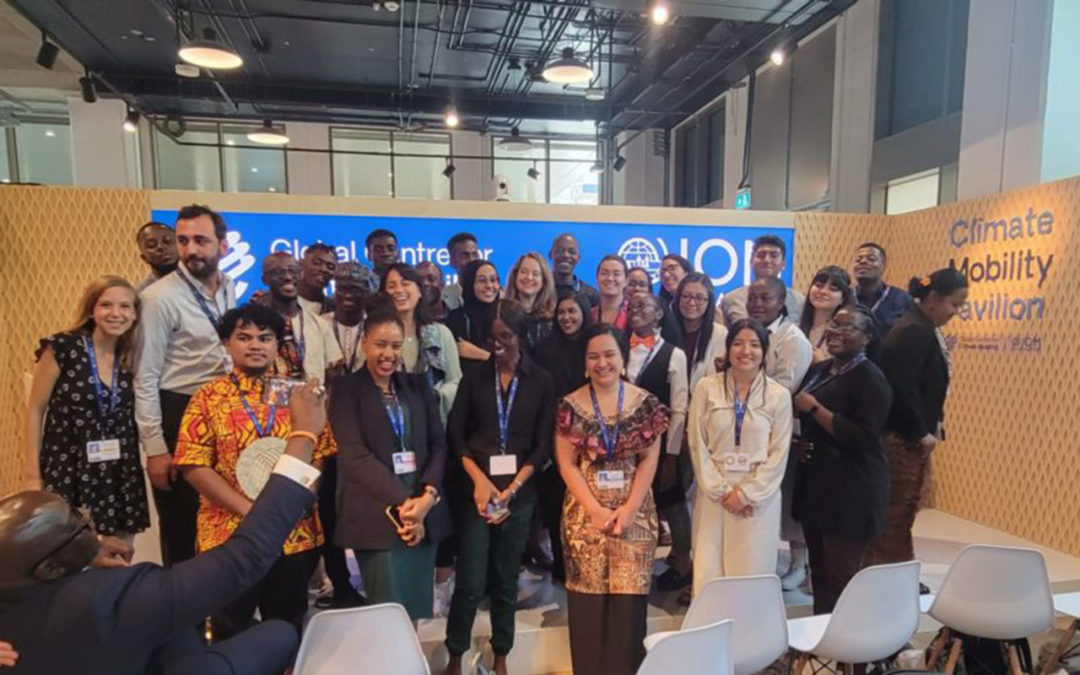
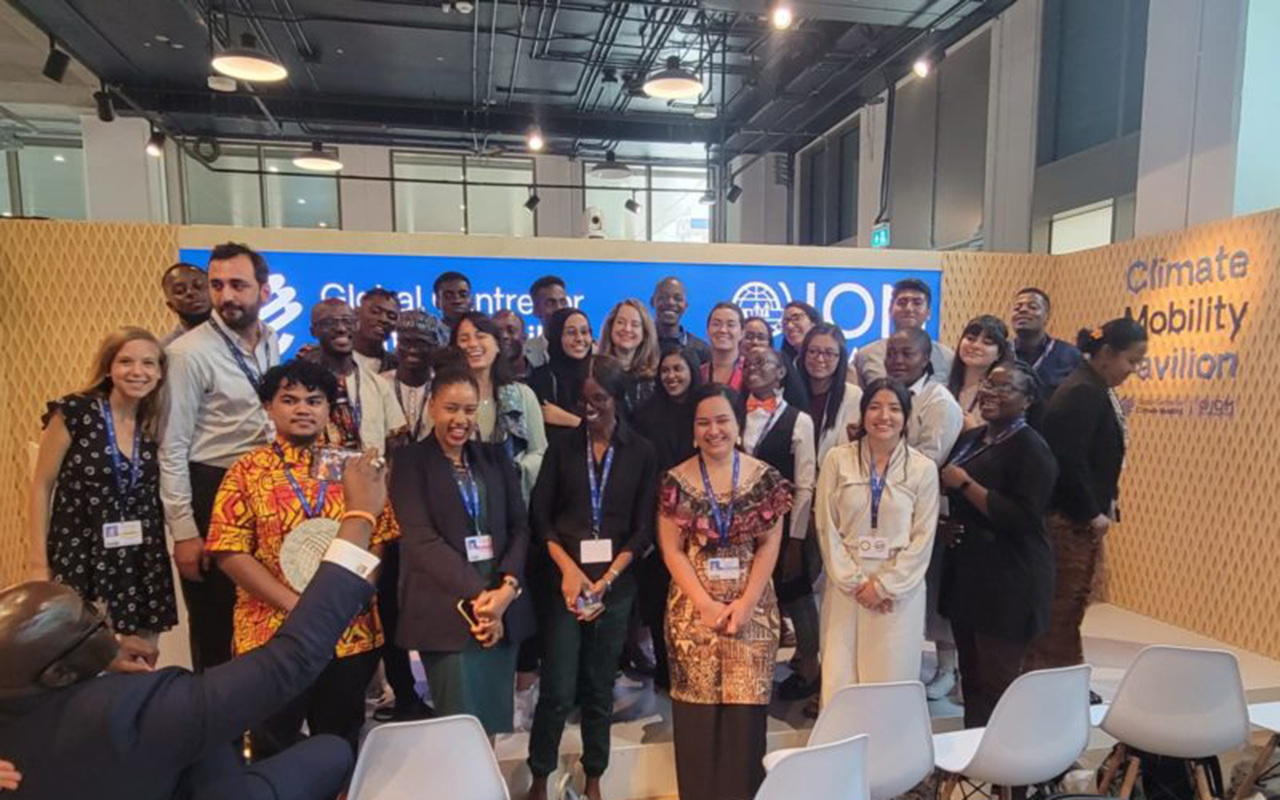
Hannah Marcus kept us in the loop with live updates from COP28. From discussions on prioritizing environmental health to active participation in the Climate Mobility Pavilion youth forum, organized by the International Organization for Migration and the Global Centre for Climate Mobility, she provided real-time insights into the vital conversations shaping the conference.

Networking for Impact: Collaborative Efforts in Focus

Hannah Marcus’s interaction with global health leader DrMariaNeira, WHO Director for Environment, Climate Change, and Health, showcased the collaborative spirit needed to address the intersection of global health and climate action.

WFPHA supports the move away from fossil fuels but urges faster and more ambitious action soon. As we reflect on COP28, the resounding message is clear: public health must play a central role in the global climate agenda.

Join us in revisiting Hannah Marcus’s journey through this pivotal conference, where the well-being of our planet and its people took the spotlight.

A Pioneering Step Towards Planetary Health: WFPHA Signs the Manifesto

A Pioneering Step Towards Planetary Health: WFPHA Signs the Manifesto

A Pioneering Step Towards Planetary Health: WFPHA Signs the Manifesto

In a significant move towards addressing the urgent challenges posed by Planetary Health, the World Federation of Public Health Associations (WFPHA) proudly announces its commitment by signing the manifesto on the Declaration of Planetary Health. This pivotal declaration, signed by numerous academic health institutions, underscores the Code Red emergency our planet faces and advocates for immediate action in education, research, and the transformation of health systems.

Key Points:

Understanding the Emergency: The Code Red warning highlights the severity of the planetary health crisis, and the WFPHA acknowledges the need for swift and comprehensive action.

WFPHA’s Pledge: By signing the manifesto, the WFPHA commits to playing a central role in addressing the global planetary health emergency, advocating for education and research to build a sustainable future.

Climate-Resilient Health Systems: The manifesto emphasizes transitioning to climate-resilient and low-carbon health systems, recognizing the vital connection between environmental health and well-being.

Endorsement of Healthy Climate Prescription: The WFPHA aligns itself with the Healthy Climate Prescription, an initiative by the Global Climate and Health Alliance and the World Health Organization, calling for urgent actions such as updating national climate commitments, a just transition away from fossil fuels, and equitable distribution of resources.

Call to Action: The WFPHA encourages its members and the global public health community to unite in addressing the planetary health emergency through education, research, and transformative action. Additionally, the endorsement of the Healthy Climate Prescription amplifies the call for concrete measures to combat climate change.

Conclusion: The signing of the manifesto and endorsement of the Healthy Climate Prescription mark historic moments, signaling the WFPHA’s dedication to a future where planetary health and human well-being are inseparable. The commitment reflects a collective effort towards a healthier, sustainable, and just world, with a clear roadmap for climate action.

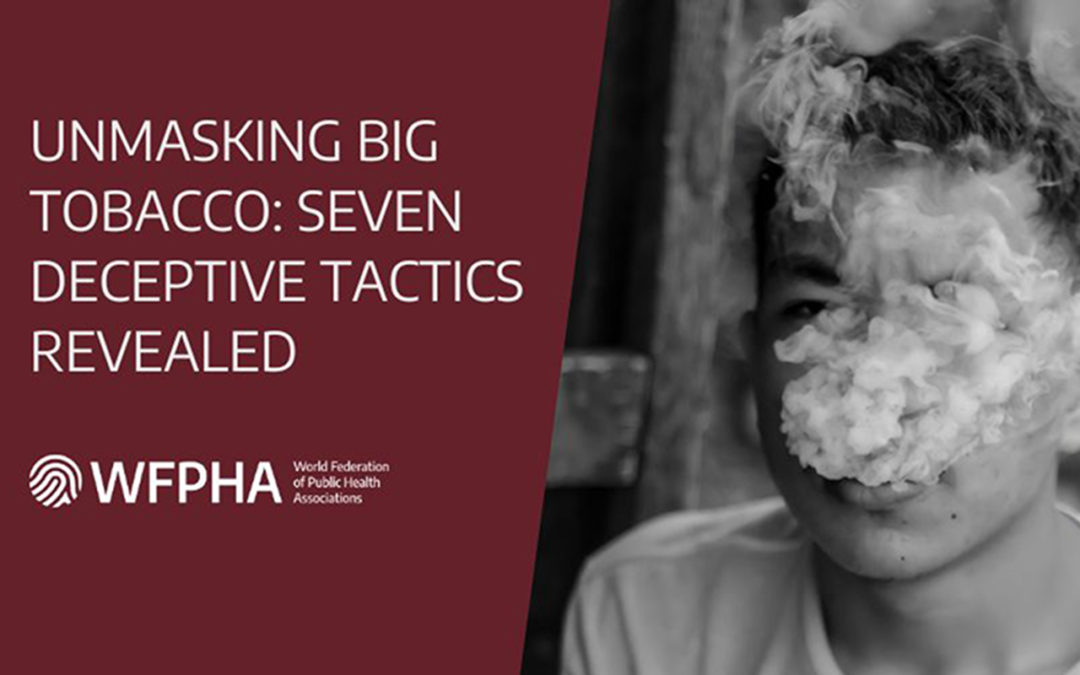
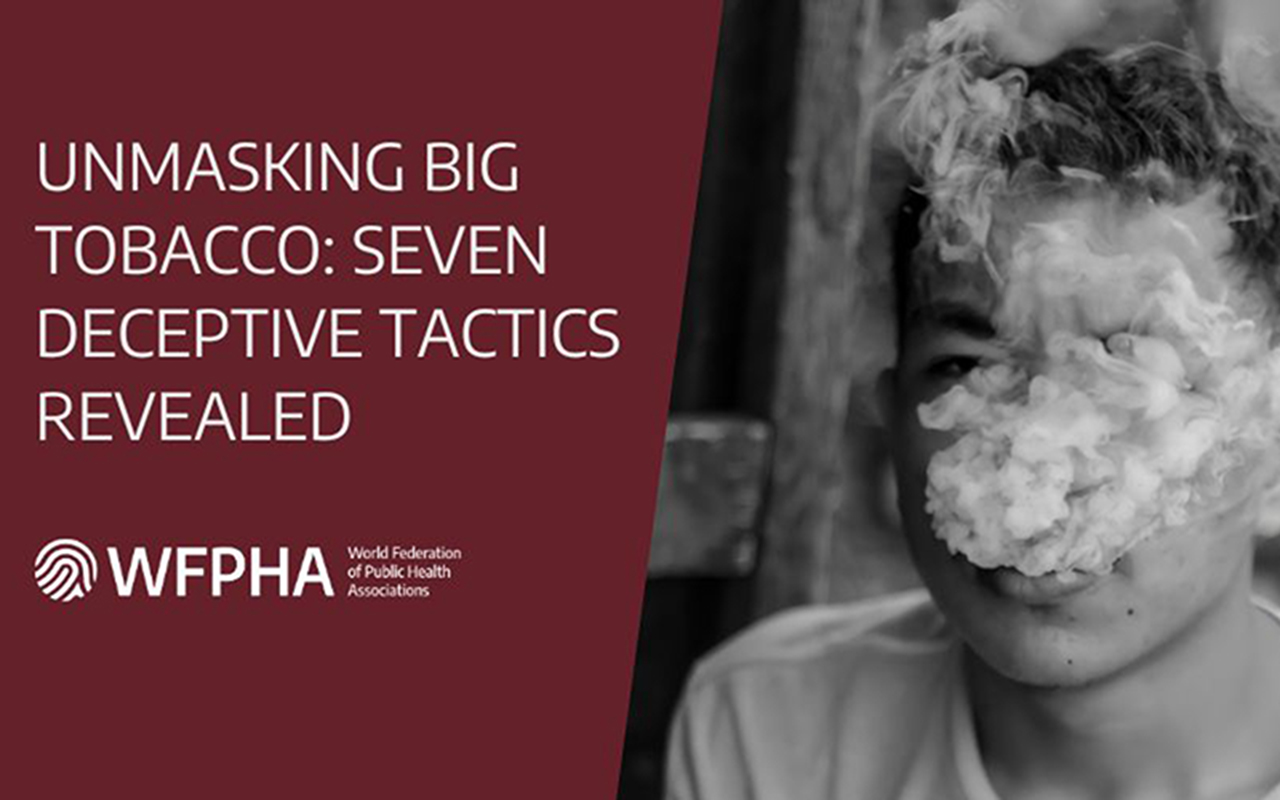
Unmasking Big Tobacco: Seven Deceptive Tactics Revealed

Unmasking Big Tobacco: Seven Deceptive Tactics Revealed

Unmasking Big Tobacco: Seven Deceptive Tactics Revealed

The tobacco industry has employed sophisticated and deceptive strategies to influence public opinion and disrupt health policies for decades. Despite overwhelming evidence of the deadly effects of tobacco products, the industry remains profitable, contributing to over 8 million tobacco-related deaths annually.

In a comprehensive review, the Tobacco Control Working Group of the World Federation of Public Health Associations (WFPHA) has identified seven key tactics employed by the tobacco industry, revealing the industry’s pervasive influence across scientific research, politics, law, sport, education, and the media.

Understanding these tactics is crucial for effective tobacco control measures. Recommendations include comprehensive advertising bans, plain packaging, health warnings, vigilance against industry front groups, education, and advocacy. Transparency in academic journals, compliance with FCTC Article 5.3, exposure of political lobbying, strict regulation of electronic nicotine delivery systems (ENDS), prioritizing data over propaganda in the ‘harm reduction’ debate, aligning policies with FCTC, and legal action against Big Tobacco are vital steps. Health professionals and the public must be informed to collectively combat the industry’s tactics, reducing global tobacco consumption and preventing related illnesses and deaths.