
COVID-19 and Disability
The Disability Pandemic: What COVID Revealed About Who Gets to Live
News
Jun 1, 2022
The pandemic has been a brutal reminder that disabled people don’t matter. Living through this, as a disabled person with a wonky immune system, has been a reminder that my life doesn’t matter to most.
Where I do matter is in my disability community, the community of people at such risk of this deadly disease who have rallied and worked together to protect ourselves. After two years of lockdowns, fear, forgetting, and being ignored, my nerves are sanded raw. A new variant is announced. Restrictions for me creep back in. I’m left wondering if this is how it will be from now on: no more music, no more crowds, no more indoor anything really, and maybe no more footy. For the rest of my life.
The past two years, and the many before them, showed me that I can build a life in four walls. I can survive terrible things. But isolation is not neutral. It wears you down. And what the disability pandemic has shown is that survival often depends less on government systems and more on each other.
What Is “The Disability Pandemic”?
The disability pandemic refers to the disproportionate risk, neglect, and systemic exclusion experienced by disabled people during COVID-19—especially in access to healthcare, vaccination, social supports, and public policy decisions.
While COVID-19 was a global crisis, its impact was not evenly distributed. In Britain, 60 per cent of those who died from COVID were disabled people. In Australia, that data isn’t properly collected. We aren’t counted.
Instead, we are hidden behind phrases like “underlying health conditions.”
Who is valued?
Whose life is worth saving?
Who gets the ventilator?
Who is triaged out?
These questions were not abstract for disabled people. They were immediate and terrifying.
“You Would Die”: Locking Down Before the World Did
In February 2020, my GP was kind but blunt.
You have to go into lockdown now, she told me. This virus is very serious for you. With all your…and she waved her hands to indicate my entire body. You can’t get this. You would die.
I walked home along Katoomba Street, my stick pressing into the pavement, navigating around people suddenly rendered dangerous. I closed the door to my flat and would not go out again for five months.
A few years earlier, my heart had failed. Doctors stood at the end of my hospital bed and told me I was about to die. It turned out I didn’t want to.
I did everything they told me: restricted fluids, cardiac rehab, and medication. I would place my hand over my heart and whisper to it, willing it to keep beating. Eventually, it did.
During COVID, that same adrenaline-fuelled panic returned. Every surge in cases meant locking down weeks before everyone else. Checking supplies. Preparing to disappear again. This time, I could only control my small part. The rest depended on whether everyone else also didn’t want me to die.
I wasn’t entirely confident.
Living in Two Worlds During COVID
The disability pandemic created a strange split reality.
In one world, things became more accessible than ever. Meetings moved online. Arts events went virtual. I could give evidence to a royal commission without having to navigate inaccessible spaces. For once, everyone was on screen, not just me stuck on someone’s phone in the corner.
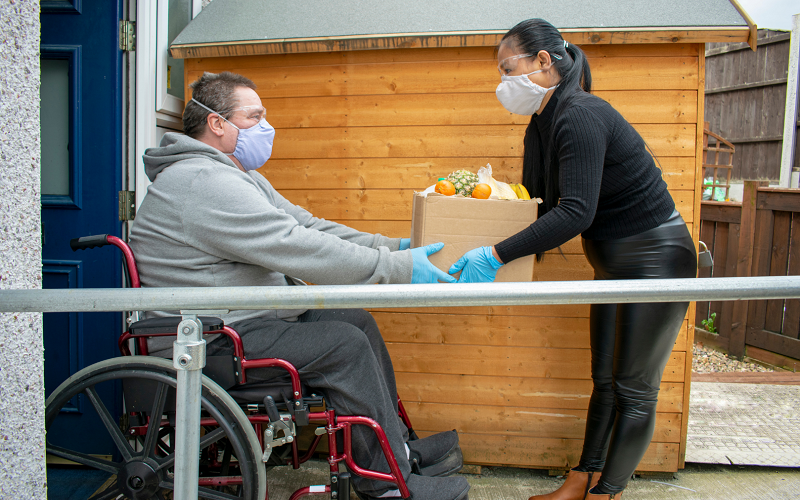
In the other world, my supports collapsed. I didn’t see another person for months. Gym and physio disappeared. My arthritis tightened its grip. When I couldn’t get food, I cobbled together strange cupboard meals. When I was lonely, I didn’t say it out loud.
On screen, no one saw my disfigured skin or wonky hands. They didn’t see me limping. In screen-land, I looked like everyone else. That virtual erasure made it harder to explain what was happening behind the camera.
The social model of disability tells us that when environments become accessible, we become less disabled. But during COVID, accessibility sometimes masked a crisis.
Triage Fears and the Shadow of Eugenics
Early reports from overwhelmed health systems overseas raised another fear: rationed care.
Disabled people around the world spoke about being triaged out. Alice Wong imagined a doctor reading her chart and deciding she was a waste of precious resources.
Those fears were not paranoia. They were rooted in history.
Australia has a long record of institutionalizing disabled people. Eugenics found fertile ground here. The Immigration Restriction Act of 1901 excluded people based not only on race, but also on mental and physical health.
Writer Amanda Tink observed that eugenic thinking did not end with World War II; it mutated.
During COVID, people across the political spectrum argued for policies that placed disabled people at higher risk of dying, then shouted at us when we objected.
If disabled people are the ones dying, then the pandemic can feel like it’s happening somewhere else, to someone else.
That is the quiet logic of the disability pandemic.
Government Failure and Community Response
When the pandemic hit, disabled people began making frantic calls:
-
I can’t get food.
-
My supports have stopped.
-
I can’t afford essential medication.
-
What are the rules?
-
What is Telehealth?
Fifteen to twenty per cent of the population was effectively forgotten.
Advocacy organizations (many run by disabled people) scrambled to respond while facing the same barriers themselves. Governments stonewalled. Complaints were redirected. Concerns were minimized.
The Disability Royal Commission later found that failure to consult disabled people in early pandemic planning led to neglect of our needs during an unprecedented emergency.
The vaccine rollout repeated the pattern. Disabled people were told we were prioritized. In practice, many could not access vaccines. Some group homes were among the last to receive them.
“Everything’s fine,” governments said.
Everything bloody well was not.
Disabled Mutual Aid: Webs of Care That Kept Us Alive
While governments faltered, disabled people organized.
Online groups became information clearinghouses. People translated public health orders. Shared state-by-state updates. Explained income support changes. Crowdfunded emergency funds. The Disability Justice Network of Australia distributed over $40,000 (mostly raised by disabled people for disabled people).
Writer Leah Lakshmi Piepzna-Samarasinha calls these networks “webs of care.” The ways we kept each other alive during COVID, they argue, were nothing short of heroic.
This is what the disability pandemic revealed most clearly: we survive because we build each other’s safety nets.
Not as charity. As solidarity.
First Peoples With Disability and Vaccine Inequity
The failures were even sharper for First Peoples with disabilities.
Damian Griffis, CEO of First Peoples Disability Network, warned that First Nations people with disabilities were at risk of being triaged out or receiving inadequate support. Vaccine access required centre-based appointments, which were not accessible to many.
The fear was justified. The rollout repeatedly failed to reach those most vulnerable.
The disability pandemic intersects with colonial history. Australia’s federation was built on exclusion: white, able, male. That foundation shapes who is visible, who is protected, and who is forgotten.
Freedom for Whom?
I watch people chanting about their freedom and think about what I’ve lost.
Will I ever go to the footy again? I’ve been going to AFL games since I was a kid, sneaking into Princes Park, singing “We are the Navy Blues,” watching my grandmother yell at Hawthorn.
The idea that I might never sit in a crowd again is unbearable.
I have had three vaccine doses. But the people in the ICU, while vaccinated, the ones dying, are people like me. People with “underlying health conditions.”
Friends make complicated plans to see me. Rapid tests. Isolation before visits. Carefully rationed social contact.
Is this how it will be now?
Flavia Dzodan asks what it means to protest public health measures in a country built on occupying space by obliterating others. The question lingers.
Freedom, during the disability pandemic, often meant freedom from considering us.
The Small Things That Are Everything
Leah Lakshmi Piepzna-Samarasinha writes that sometimes we think we must save the world, and anything less is nothing.
But we, in our small crip circles, are the world.
The small, low-key things we do to keep each other alive are nothing. They are everything.
That is the quiet lesson of the disability pandemic.
Disabled people have always built networks of care. We will continue to. These webs will endure beyond COVID, beyond the next crisis, beyond the next wave of forgetting.
We survive because we refuse to let each other disappear.
About the Author
El Gibbs is an award-winning writer and disability advocate. Her work has featured in Growing up Disabled in Australia, Overland, Eureka Street, and Croakey.
Recent Comments