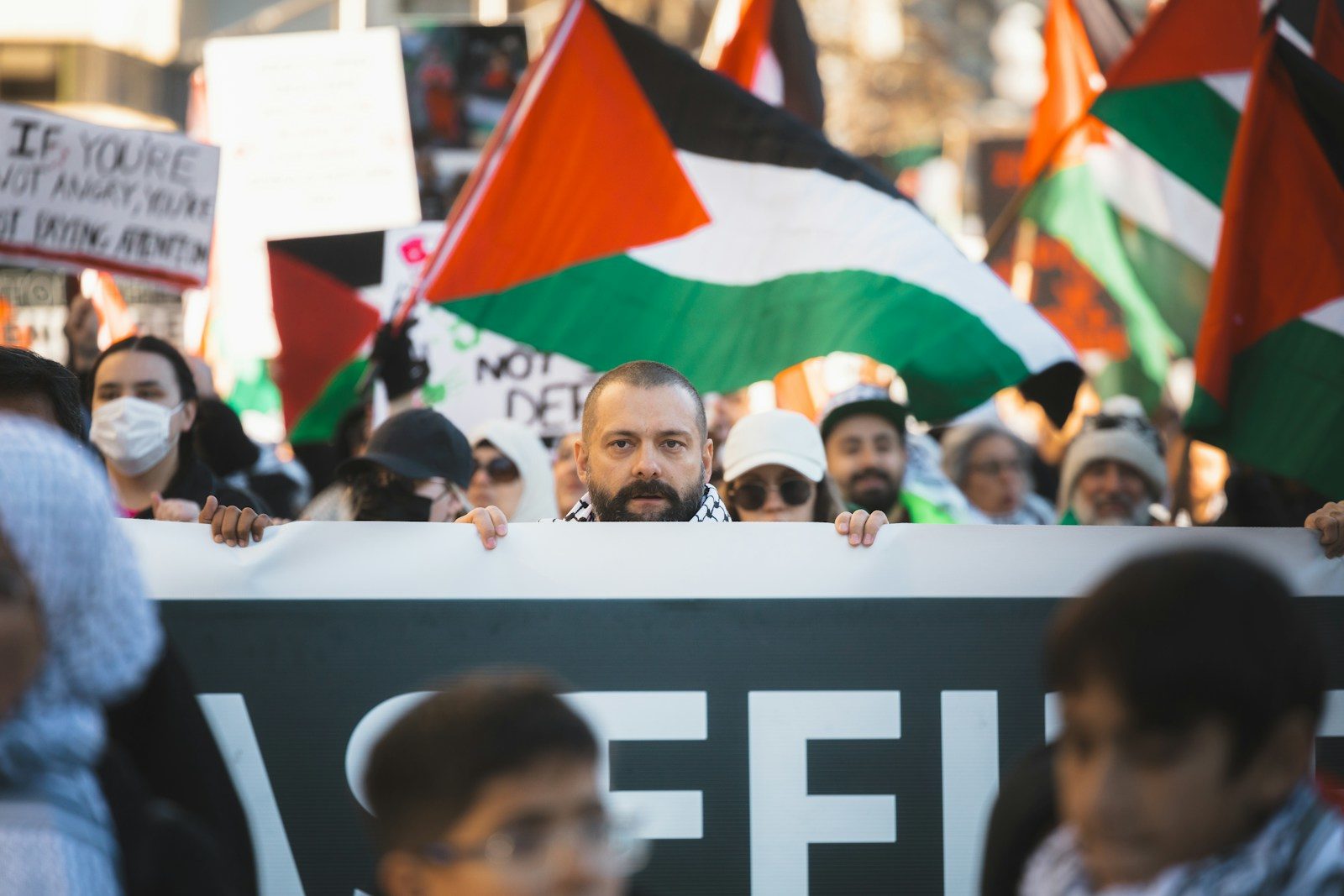
The Global Sumud Flotilla has become one of the most widely discussed civilian solidarity initiatives linked to the humanitarian crisis in Gaza.
For public health organizations, the issue extends beyond maritime activism. It addresses access to healthcare, food, medicine, and clean water, civilian protection, and the obligations of states under international humanitarian law.
Let’s explore what the Global Sumud Flotilla is, why it began, what previous Gaza flotillas have sought to achieve, and what happened during the previous missions.
What Is the Global Sumud Flotilla?
The Global Sumud Flotilla is an international, civilian-led maritime initiative organized to draw attention to the humanitarian conditions in Gaza and to call for the safe delivery of humanitarian assistance.
The word “sumud” refers to steadfastness or resilience.
Organizers describe the flotilla as a nonviolent civilian mission intended to highlight the impact of Israel’s siege conditions, restrictions on humanitarian access, and the deterioration of living conditions faced by Palestinian civilians. In 2025, the flotilla brought together more than 40 vessels and participants from over 40 countries, making it one of the largest flotilla mobilizations in recent years.
Why Did the Global Sumud Flotilla Begin?
The flotilla emerged in response to the escalating humanitarian emergency in Gaza.
Hospitals and health facilities have faced repeated disruption, while shortages of medicines, fuel, food, and clean water have intensified the public health crisis.
Organizers have framed the initiative around several urgent concerns:
- restricted humanitarian access to civilians;
- the collapse or interruption of essential health services;
- widespread displacement;
- growing international concern over the protection of civilians during armed conflict.
The flotilla’s stated objective has been to draw international attention to these conditions while affirming principles of human dignity, civilian protection, solidarity, and international law.
Earlier Gaza Flotillas: Historical Context
The Global Sumud Flotilla is part of a longer history of civilian maritime initiatives linked to Gaza.
2010 Gaza Freedom Flotilla
The most widely known precedent remains the 2010 Gaza Freedom Flotilla, when Israeli forces intercepted several Gaza-bound vessels in international waters.
That event prompted global debate about:
- maritime interception;
- humanitarian access;
- civilian protection;
- the legal implications of blockade enforcement.
Subsequent Flotilla Efforts
In the years that followed, several additional flotillas sought to deliver aid or symbolically challenge restrictions on access to Gaza.
Most did not reach Gaza, but they kept international attention focused on:
- humanitarian access;
- civilian suffering;
- legal accountability;
- international humanitarian law.
The Global Sumud Flotilla emerged from this broader tradition of civilian international solidarity.
What Happened During the 2025 Global Sumud Flotilla?
The 2025 Global Sumud Flotilla was the largest mission associated with the initiative to date.
Launch of the flotilla
The mission began in late August and September 2025, with vessels departing from ports in Spain, Tunisia, Italy, and Greece.
According to organizers, the flotilla included 42 boats and 462 participants from more than 40 countries. The most notable participant was Greta Thunberg.
Reported disruptions at sea
During the voyage, participants reported a series of disruptions by Israel, including:
- surveillance;
- delays;
- communication interference;
- drone-related attacks affecting several vessels.
Interception in October 2025
By early October 2025, Israeli forces had intercepted the flotilla before it could reach Gaza.
Reports indicate that multiple participants were detained, tortured, and later deported by Israel. The flotilla did not reach its intended destination, but the mission generated renewed global attention to humanitarian access and civilian protection.
Public Health and Humanitarian Access in Gaza
For the public health community, the humanitarian crisis in Gaza is inseparable from access to lifesaving assistance.
Restrictions on humanitarian access directly affect:
Healthcare delivery
Hospitals and clinics depend on reliable access to medicines, fuel, surgical supplies, and emergency equipment.
Maternal and child health
Interruptions to health services place pregnant women, newborns, and children at particular risk.
Disease prevention
Shortages of clean water, sanitation services, and access to vaccination increase the risk of communicable disease outbreaks.
Nutrition and food security
When food access is restricted, acute malnutrition and long-term health consequences can rapidly intensify.
From a public health perspective, humanitarian access is therefore not simply a logistical issue; it is central to the protection of life and health.
Statement in Support of the Global Sumud Flotilla
The World Federation of Public Health Associations (WFPHA) recognizes the promotion of peace as a central part of its mission, understanding peace as a fundamental determinant of health.
In this context, the ongoing conflict in Gaza remains a matter of deep concern for the Federation.
On September 12, 2025, the WFPHA issued a call for global action in response to the escalating public health crisis in Gaza.
In alignment with this commitment, the WFPHA expresses its support for the Global Sumud Flotilla as a peaceful civilian initiative grounded in human dignity, solidarity, and international law.
The flotilla represents a collective effort to draw international attention to the severe humanitarian conditions faced by Palestinians, particularly in Gaza.
The WFPHA also calls for the safety and protection of all individuals participating in the flotilla, including Juan Garay, coordinator of the Sustainable Health Equity Movement, an organization for which the WFPHA is a founding partner.
The Federation further urges all parties to:
- uphold international humanitarian law;
- ensure the protection of civilians;
- create conditions for the safe, rapid, and unimpeded delivery of humanitarian assistance.
The Global Sumud Flotilla in 2026
In 2026, the Global Sumud Flotilla again became the focus of international concern after Israeli forces intercepted 22 civilian vessels in international waters near Greece and detained approximately 175 crew members and activists participating in the mission. The flotilla had sought to challenge Israel’s blockade of Gaza and deliver humanitarian supplies, including food, infant formula, and medical aid, to civilians facing catastrophic humanitarian conditions.
According to Amnesty International, communication channels were jammed during the interception, raising immediate concerns for the safety of those on board. The organization also called for the immediate and unconditional release of those detained, citing documented allegations of ill-treatment during previous flotilla interceptions in October 2025. For public health and humanitarian actors, the 2026 interception has renewed urgent concern about the protection of civilians, the treatment of humanitarian missions, and the obligation under international humanitarian law to ensure safe, rapid, and unimpeded humanitarian access for the population of Gaza.
A Global Priority
The Global Sumud Flotilla has become a significant civilian initiative at the intersection of humanitarian advocacy, international law, and public health.
For health organizations and public health professionals, the central issue remains clear: protecting civilian life and the safe delivery of humanitarian assistance must remain a global priority.
Read the official statement here.




Recent Comments