
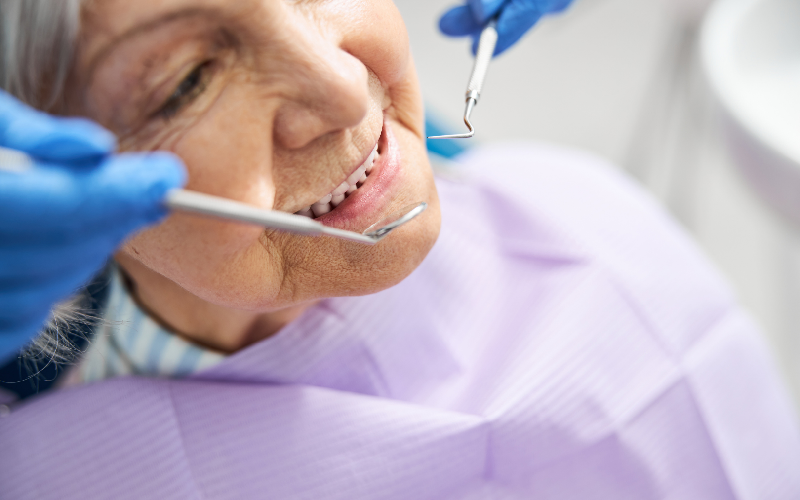
Oral Health Care for the Institutionalized Elderly
News
May 18, 2022
Life expectancy has risen significantly across most countries over the past two decades, according to the World Health Organization Global Health Estimates. At the same time, older adults (particularly in countries such as the United States) are far more likely to retain their natural teeth into later life.
While this reflects progress in preventive dentistry, it also introduces new clinical and public health challenges. Without consistent and effective oral hygiene support, poor oral health can intensify systemic conditions and increase health risks, especially among residents of long-term care facilities.
This makes oral health care for the institutionalized elderly a growing global priority.
When Oral Health Declines, Overall Health Follows
For elderly individuals in residential care, oral health is not a cosmetic issue; it is directly connected to chronic disease management and survival outcomes.
Research has linked inadequate oral hygiene with:
-
Worsening Type 2 diabetes
-
Increased risk and progression of dementia
-
Higher incidence of hospital-acquired and aspiration pneumonia
-
Greater levels of frailty
Residents in care homes are particularly vulnerable. Many depend on carers for daily hygiene routines, and compromised immune systems amplify the consequences of neglected oral care.
Featured Snippet Summary
Why is oral health care important for institutionalized elderly people?
Poor oral hygiene can worsen diabetes, increase dementia risk, raise the likelihood of pneumonia, and contribute to frailty, particularly among elderly residents who rely on caregivers for daily support.
Recognition at Policy Level: Governments Begin to Respond
Several countries have formally acknowledged the gap in oral health provision within aged care systems.
In England, the National Institute for Health and Care Excellence published guidelines addressing oral health for adults in care homes. This was followed by a review by the Care Quality Commission, which found that many care home owners and staff were unaware of how to ensure that residents’ daily oral hygiene met acceptable standards.
Subsequently, NHS England introduced the Framework for Enhanced Health in Care Homes, followed by a government-issued oral health toolkit for adults in care homes.
In the United States, the comprehensive Smiles for Life curriculum, developed by Smiles for Life, includes a geriatric dentistry module designed to strengthen clinical knowledge.
Earlier pilot initiatives had already demonstrated that structured intervention could improve outcomes. However, scaling those efforts remains an ongoing challenge.
Access Barriers: When Residents Need a Dentist
Daily hygiene is only one component. Access to professional dental services remains a persistent obstacle in many care facilities.
Transport limitations, workforce shortages, and medical complexity often delay in-person dental visits. In response, teledentistry has emerged as a promising solution.
Recent implementations in:
-
France
-
Japan
-
Australia
have demonstrated that remote consultations can support preliminary diagnosis and clinical advice. Digital tools reduce unnecessary transfers while improving timely assessment.
Featured Snippet Summary
How can teledentistry support oral health care for older adults in institutional settings?
Teledentistry enables remote consultation, preliminary diagnosis, and professional advice without requiring residents to travel, improving access and reducing delays in care.
Technology as a Force Multiplier
Emerging technologies are further expanding possibilities.
Research on the evaluation of mobile phone images by off-site dental practitioners has demonstrated effectiveness in screening schoolchildren. Similar approaches can be adapted for aged care settings.
Additionally, real-time artificial intelligence tools, such as Smilio.ai, offer innovative, cost-efficient, and person-centred opportunities to screen for oral diseases in institutional settings.
These tools do not replace clinicians. Instead, they enhance early detection, streamline referrals, and make oral health care for institutionalized older adults more scalable.
Workforce Integration: Training Beyond Dentistry
Sustainable improvement depends on empowering those already providing daily care.
In the United Kingdom, Knowledge Oral Healthcare delivers oral health training to nurses, allied health professionals, and carers in the aged and disability sectors. In Australia, Seniors Dental Care Australia provides similar programs.
A notable systems-level intervention occurred within the U.S. Department of Veterans Affairs, where oral health care was integrated into inpatient services via the nursing workforce. Translating research into clinical practice resulted in measurable improvements in oral hygiene and significant reductions in hospital-acquired pneumonia.
This model demonstrates that embedding oral health responsibilities into existing care frameworks can yield substantial public health gains.
Advocacy and Public Accountability
Policy reform is often accelerated through coordinated advocacy.
In Australia, twelve key stakeholder organizations (including the Public Health Association of Australia and the Australian Dental Association) issued a joint media release on World Oral Health Day, prior to the federal election, calling for stronger aged-care oral health strategies.
The Australian Dental Association’s “Stop the Rot” campaign further highlights the need for systemic reform in aged care.
Media engagement has also played a role. The Australian Health Journal released a World Oral Health Day video advocating for the prioritisation of oral health in aged care and disability services.
The Demographic Reality We Cannot Ignore
As life expectancy increases and more older adults retain their natural dentition, oral health demands will intensify rather than decline.
Improving oral health care for the institutionalized elderly requires coordinated effort from:
-
Governments
-
Aged care providers
-
Dental practitioners
-
Nurses and allied health professionals
-
Consumer and advocacy organizations
Innovation in teledentistry, mobile imaging, and artificial intelligence offers meaningful opportunities. However, technology alone cannot resolve systemic gaps. Policy alignment, workforce training, and sustained political commitment remain essential.
Closing Perspective
The evidence is clear: oral health is inseparable from general health. For elderly residents in institutional care, neglecting the mouth risks compromising the whole person.
Ensuring high-quality oral health care for the institutionalized elderly is fundamental to maintaining dignity, preventing disease, and achieving equitable health outcomes in ageing societies.
By Kenneth Eaton & Leonie Short