
Policy Statement on Polio Eradication: The Last Battle?
News
Oct 12, 2021
Understanding Poliomyelitis and Its Global Impact
Poliomyelitis (polio) is an infectious viral disease that predominantly affects children under 5 years old. The virus spreads through person-to-person contact, primarily via the fecal-oral route or, less frequently, through contaminated food and water. It multiplies in the intestines and can invade the nervous system, causing permanent paralysis.
Approximately 1 in 200 infections results in irreversible paralysis, and 5–10% of paralyzed individuals die due to respiratory muscle immobilization. Despite this, 90% of infected individuals remain asymptomatic carriers.
There is no cure for polio; it is preventable only through routine childhood immunization.
Global Progress Toward Polio Eradication
In 1988, the World Health Assembly adopted a resolution calling for the worldwide eradication of polio, leading to the creation of the Global Polio Eradication Initiative (GPEI). National governments, the WHO, Rotary International, the CDC, UNICEF, the Bill & Melinda Gates Foundation, and Gavi, the Vaccine Alliance support this effort.
Since then, global cases of wild poliovirus have decreased by over 99%, from an estimated 350,000 cases in 2019 to 175 in 2020, and just 2 cases reported by mid-September 2021.
Countries Where Polio Remains Endemic
Polio remains endemic in Afghanistan and Pakistan (wild polio type 1, WPV1).
-
In Pakistan, 72 of 468 (15%) environmental samples tested positive in 2017. In 2020, 84 cases of WPV1 were reported, and by mid-September 2021, one case had been recorded.
-
In Afghanistan, WPV1 cases increased from 21 (2018) to 29 (2019) and 56 (2020). By mid-September 2021, one wild polio case had been reported.
WHO estimates that successful polio eradication will save USD $40–50 billion, while failure could result in 200,000 new cases annually within the next decade.
Recommendations to Address Current Challenges in Polio Eradication
Strengthen International Relations with Pakistan and Afghanistan
Pakistan and Afghanistan function as a single epidemiological zone due to significant cross-border population movements. Both countries have collaborated through joint Technical Advisory Group (TAG) meetings and have agreed to vaccinate children under ten at border points on the same day.
Further strategic efforts should include:
-
High-quality, large-scale vaccination campaigns targeting core reservoir areas.
-
Policies are shaped through collaboration between government and public-private partners, such as the National Highway Authority and media networks.
-
Support for ongoing WHO and partner engagement with the new Afghan government and authorities in Pakistan.
Reach Under-Immunized Children Using Innovative Approaches
Reaching under-immunized children remains a significant challenge due to vaccine refusals, operational gaps, difficulties in tracking mobile populations, and challenges in following up when children are not at home.
To strengthen reach and immunization quality:
-
Use digital tools such as GIS mapping and mobile-based monitoring to track outbreaks.
-
Redesign door-to-door campaigns to prioritize border entry and exit points.
-
Expand vaccination efforts to include non-health workers and migrant populations.
Maintain Continuity of Operations Across the Pakistan–Afghanistan Region
Although GPEI operations in Pakistan are well funded, efficiency is hindered by gaps in documentation within the public health delivery system. A lack of electronic immunization records complicates accurate tracking.
Key steps include:
-
Conduct all external reviews within the immunization indicator’s 28-day average lifespan.
-
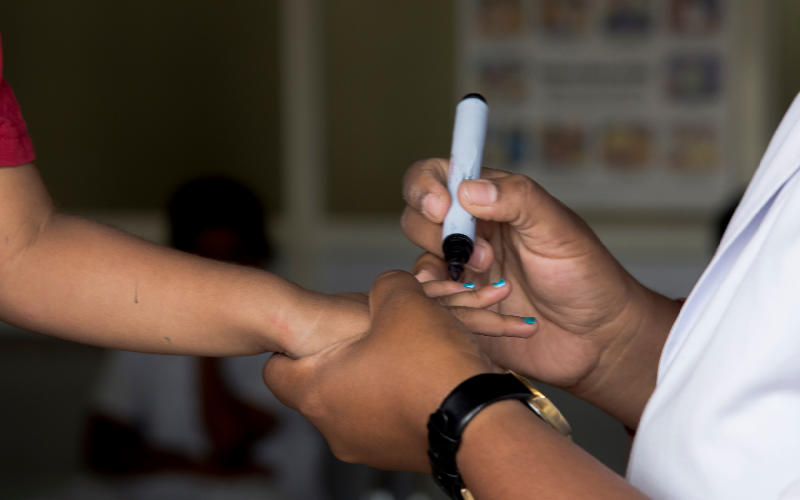
Supplement finger-marking with immunization cards and digital records.
-
Integrate polio surveillance with broader health services across both countries.
-
Provide community services (such as hygiene kits and maternal/child care supplies) during polio campaigns.
Address the Dual Challenge of Polio and COVID-19
In 2020, GPEI paused polio activities to redirect resources to the COVID-19 response, during which polio cases resurged (84 in Pakistan, 56 in Afghanistan).
To address this dual burden, revised operational procedures should include:
-
Water, Sanitation, and Hygiene (WASH) promotion
-
Non-pharmaceutical infection control (masks, sanitizers, thermometers)
-
Enhanced staff training for safe campaign implementation
Summary
Eradicating poliovirus in Afghanistan and Pakistan requires unified action across military, religious, governmental, and social institutions. It demands trans-disciplinary leadership that ensures transparent processes and upholds both security and primary health objectives. Strong national capacity is essential to meet global commitments and to ensure every child receives lifesaving vaccinations.
Key Messages
-
Polio is a highly infectious viral disease that attacks the nervous system and can cause irreversible paralysis and death.
-
There is no cure for polio; it can only be prevented through immunization.
-
Polio remains endemic in two countries: Afghanistan and Pakistan.
-
Failure to stop polio could result in as many as 200,000 new cases every year, for up to 10 years, across the world.
-
Eradicating polio will save lives and could save USD $50 billion in low-to middle-income countries.
-
Continued coordination among international organizations, NGOs, philanthropists, religious institutions, and governments is essential to eradicate polio finally.
References
1. World Health Organization. (2019, July 22). Poliomyelitis.
2. Global Polio Eradication Initiative. (2021, May 25). Polio + Prevention.
3. Elhamidi, Y., Mahamud, A., Safdar, M., Al Tamimi, W., Jorba, J., Mbaeyi, C., Hsu, C. H., Wadood, Z., Sharif, S., & Ehrhardt, D. (2017). Progress Toward Poliomyelitis Eradication – Pakistan, January 2016-September 2017. MMWR. Morbidity and mortality weekly report, 66(46), 1276–1280.
4. Polio Eradication Initiative. (2021). National Emergency Action Plan 2021.
5. Shah, S., Saad, M., Rizwan, M., Haidari, A., & Idrees, F. (2016). Why We Could Not Eradicate Polio from Pakistan and How Can We? Journal of Ayub Medical College Abbottabad – Pakistan, 28(2), 423-425.
6. Hussain, S.F., Boyle, P., Patel, P. et al. Eradicating Polio in Pakistan: an Analysis of the Challenges and Solutions to this Security and Health Issue. (2016). Global Health 12(63).