
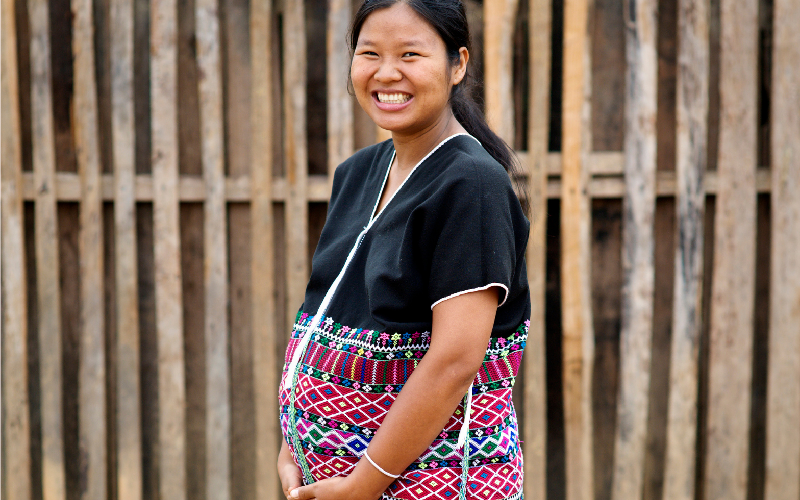
Reducing Maternal Mortality in Low- and Middle-Income Countries Through Skilled Birth Attendants
News
Oct 14, 2021
Maternal mortality remains one of the most urgent and preventable global health challenges. Despite decades of international commitments, women in low- and middle-income countries (LMICs) continue to face an unacceptably high risk of death during pregnancy and childbirth. Increasing access to skilled birth attendants (SBAs) is one of the most effective and evidence-based strategies to reduce maternal mortality and advance global health equity.
Maternal Mortality as a Global Health Priority
The World Health Organization (WHO) has long identified maternal mortality as a global priority for improving global health outcomes. Maternal mortality is defined as the “death of a woman while pregnant or within 42 days of the end of pregnancy…from any cause related to or aggravated by the pregnancy.”
The United Nations Millennium Development Goal 5 (MDG5), which aimed to reduce the global maternal mortality ratio (MMR) by three-quarters, was not met by its 2015 deadline. As a result, the burden of avoidable maternal deaths persists in many low-resource countries, rural areas, and disadvantaged communities.
Current trends show a global maternal mortality ratio of 211 maternal deaths per 100,000 live births. In low- and middle-income countries, as defined by the World Bank, this ratio exceeds 800 maternal deaths per 100,000 live births. This unacceptable death toll highlights the urgent need for further action in resource-poor countries to address the major causes of maternal death and end avoidable maternal mortality by increasing investment, access, and equity in skilled birth attendants for all.
Background: Causes of Maternal Mortality in LMICs
According to the World Health Organization, the leading global causes of maternal death include hemorrhage, hypertension, and sepsis. A WHO systematic analysis identifies post-partum hemorrhage as the leading cause of maternal death in LMICs and worldwide, accounting for 21.7% of all maternal deaths.
Post-partum hemorrhage is preventable mainly with access to appropriate resources and timely care. However, when it occurs, hemorrhaging can lead to death in less than two hours. This makes it both one of the most preventable and most emergent maternal health complications. Focusing on this specific cause allows policy efforts to narrow their scope and target areas where intervention can have the most significant impact.
Global Commitments and Sustainable Development Goal 3.1
This policy statement is informed by the call to action outlined in Sustainable Development Goal (SDG) 3.1. Developed by the United Nations to extend and deepen the Millennium Development Goals, SDG 3.1 commits member states to reducing global maternal mortality and achieving a more sustainable and healthier future by 2030.
While global improvements have been achieved, maternal mortality declined by 38% over 17 years, with an average annual reduction of 3%. Progress remains uneven. These improvements are likely due to increased awareness, technological advancements, and improved access to healthcare resources in certain regions. However, maternal mortality continues to be a significant cause of death in LMICs, underscoring the continued relevance and urgency of SDG 3.1.
The Role of Primary Prevention and Health Systems Strengthening
Primary interventions addressing family planning, including contraception use, education, and access to legal and safe abortion services, have contributed significantly to reductions in maternal mortality. Research published in the Maternal and Child Health Journal indicates that the indirect effects of contraception use have saved one million lives in high-risk areas.
The Indonesian Family Planning Program demonstrates the impact of primary prevention. If similar programs were implemented in low-income areas, unmet family planning needs could be reduced from 10% to 7%, preventing more than 37,000 maternal deaths.
Despite these gains, achieving SDG 3.1 requires addressing unmet needs within health systems to reduce risks during pregnancy and childbirth. Improvements in skilled delivery and healthcare environments alone could reduce maternal mortality ratios by an additional 19–20%.
Skilled Birth Attendants and Maternal Mortality Reduction
While global progress has been made, LMICs (particularly in Sub-Saharan Africa) continue to experience disproportionately high maternal mortality rates. Sub-Saharan Africa accounts for nearly two-thirds of all maternal deaths worldwide. These regions face persistent challenges related to inadequate, inaccessible, and inequitable healthcare resources.
Skilled delivery is a critical intervention for reducing preventable maternal complications. The World Health Organization defines skilled birth attendants as accredited health professionals, such as midwives, doctors, or nurses, who have been educated and trained to a high level of proficiency. Evidence shows that where 100% of births are attended by skilled health staff, maternal mortality ratios fall to fewer than five deaths per 100,000 live births. This strong correlation underscores the life-saving impact of skilled birth attendance.
Purpose and Scope of the Policy Statement
The purpose of this policy statement is to bridge the gap in maternal mortality outcomes between high-income and low- and middle-income countries, in alignment with Sustainable Development Goal 3.1. The goal aims to reduce the global maternal mortality ratio to fewer than 70 deaths per 100,000 live births by 2030, using indicators such as MMR and the proportion of births attended by skilled health personnel.
Women in high-income countries face a 1 in 5,400 chance of dying from a maternal complication, compared to a 1 in 45 chance in low-income settings. These disparities must be addressed by expanding access to quality care, reducing avoidable maternal deaths, improving MMR outcomes in LMICs, addressing urban-rural inequities, and strengthening future healthcare resources. According to the United Nations, investing in health systems could save up to 5 million mothers’ lives.
Target Areas for Intervention
Low- and middle-income countries account for 94% of all maternal deaths globally. Sub-Saharan Africa contributes two-thirds of these deaths, while South Asia accounts for one-fifth, together representing 86% of global maternal mortality.
High-priority countries include South Sudan, Somalia, the Central African Republic, Yemen, Syria, Sudan, the Democratic Republic of Congo, Chad, Afghanistan, Haiti, Guinea, Nigeria, and Ethiopia. Maternal mortality ratios in these countries range from 31 to 1,150 per 100,000 live births.
Within these regions, rural and Indigenous populations face an 80-percentage-point gap in skilled birth attendance and a 25-percentage-point gap in antenatal care and education. Similar disparities exist in high-income countries, including the United States, where socioeconomic and racial inequities drive higher maternal mortality rates in low-income and Black communities.
Policy Context and Precedents
This policy builds on prior international efforts, including the American Public Health Association’s 2011 Call to Action to Reduce Global Maternal, Neonatal, and Child Morbidity and Mortality. That policy emphasized political commitment, targeted funding, professional competency, and program evaluation to address stalled progress toward MDG5.
It also aligns with the World Federation of Public Health Associations’ policy statement Reducing Maternal Mortality as a Human Right, which calls for stronger government accountability, improved health systems, enhanced policy research, and the promotion of gender equity. This statement advances those recommendations explicitly by focusing on skilled birth attendants, training, and access to essential equipment in low-resource settings.
Recommendations to Reduce Maternal Mortality Through Skilled Birth Attendance
To address the ongoing maternal mortality crisis in low-resource areas and close gaps in achieving the Millennium and Sustainable Development Goals, it is recommended that governments and advocacy organizations:
- Increase skilled birth attendance to more than 90% in areas where coverage is currently below 50%.
- Expand healthcare utilization in the poorest LMIC regions with the highest maternal mortality ratios.
- Improve access to essential supplies, medications, and hygienic clinical practices.
- Promote and support maternal healthcare training programs in low-resource districts.
- Strengthen primary prevention contraception programs.
- Require national antenatal care and skilled birth attendance guidelines, including licensing and regulation.
- Develop comprehensive strategies for skilled attendant provision, including clinic locations, staffing, monitoring, and training.
- Enhance capacity building and cultural competency in maternal healthcare settings.
- Leverage UN agencies, the WHO, the World Bank, and other multilateral organizations to inform stakeholders.
- Ensure access to life-saving medications such as Misoprostol and simple blood-loss management tools to prevent deaths from post-partum hemorrhage.
Advancing Equity in Maternal Health
Reducing maternal mortality in low- and middle-income countries is both a public health imperative and a matter of human rights. Expanding access to skilled birth attendants, strengthening health systems, and addressing inequities across populations are essential steps toward ending preventable maternal deaths and achieving Sustainable Development Goal 3.1.